In Defense of Commercial Yeast
Sourdough is having a whole moment right now, and I’m living for it. I love teaching people how to cultivate and maintain their own starters. I love that relationship with an ecosystem; the slow rhythms, the observation, the quiet responsibility of keeping something alive.
But in the same breath, I see so many new bakers disparaging commercial yeast. As if it’s a shortcut. As if it’s a cheat. As if bread made with a packet instead of a jar somehow counts less.
This week, I made a commercially yeasted loaf that deserves a little defense.
Setting the Scene
On Sundays, I often work with a one-on-one learner. In these sessions, we’ve been working with a 50% spelt dough at 85% hydration, no starter, and all commercial yeast leavening.
This week, I made the choice to show him a modified autolyse process. This is one of my favorite gluten strengthening techniques… But I digress. The gist is the salt is added in after a period of rest after mixing the flour, water, and yeast until fully incorporated but not developed structurally. And with that choice, I was inspired to make another series of choices.
The thing is, this has been a busy week. I had projects to start, appointments to take, and a bagel making class to teach at UPenn (still happy crying over this). So…. I made the choice to wait on the bake. My 50% spelt dough, with it’s more delicate gluten structure, was going to wait in my fridge. She waited three full days to be shaped. And she took some time at room temperature before being covered and left in the fridge again overnight. She was out just long enough for a slight indent to form but bounce back when I touched my loaf gently.
And this morning, I turned on my oven and started boiling some water in my kettle. I scored my still cold loaf and let her bake, adding a pan on boiling water for half of her bake. And what I ended up with was this:
Great lift and intact gluten structure
Open and soft crumb
Nutty and lightly sweet in flavor
Beautiful browning and blistering
And this dough, even without the sourdough we’ve held up so high on a pedestal, is probably one of the best breads I’ve made with limited resources and equipment in my home kitchen. No, it was not sour. But that wasn’t the intent of this loaf. Complexity of flavor in the slow starch breakdown from cold yeast still came through. It was still more than a mostly white bread loaf. It still had a beautiful, albeit under steamed, crust. This loaf took her time. And she still had a story to tell without the preferred fermentation agent of the internet.
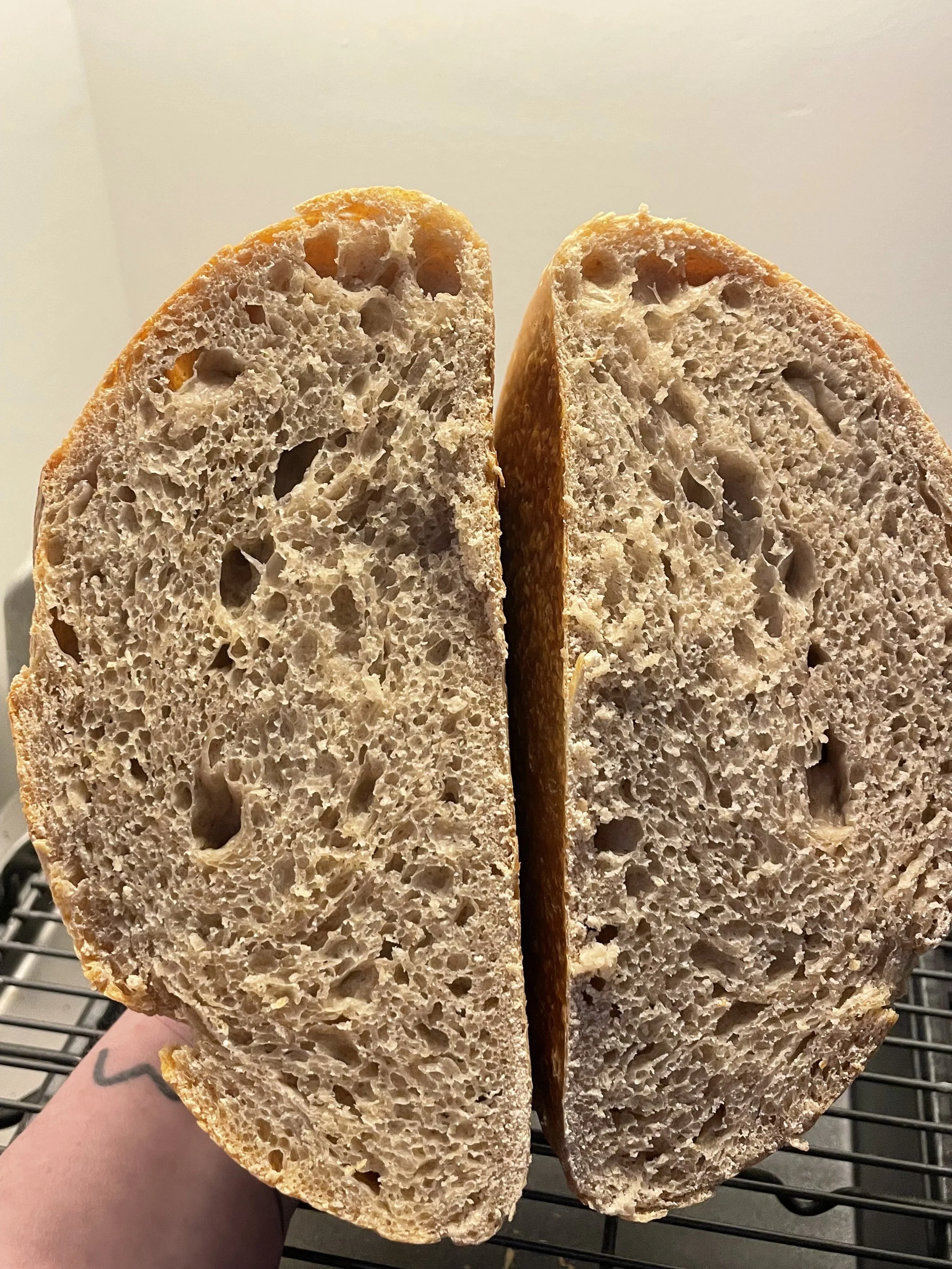
Internal Crumb Structure
Open, airy, minimal shaping holes. Consistent fermentation across structure.
Choice as Cause and Effect
After spending so many years surrounded by professional level baking equipment, I’ve come to realize I have no at home baking equipment to my name. All I have is a sheet pan, a metal pan, a water kettle, and a set of kind of sharp kitchen shears. I own less than even the most beginner baker.
The thing is, you don’t need anything but an oven, a sheet pan, and a pan of boiling water to make a great loaf of bread. You don’t need a well established starter. You don’t need the most expensive Dutch oven. You need to make choices and understand how those choices can affect your bread.
Bread is a system of baking and structural thinking. It’s not a single idea of the perfect loaf. Certain tools and equipment can in fact make the process easier, faster even. But when thought of as a system, bread can also be a project that works around your life. And commercial yeast can still create a bread you’re excited to eat.
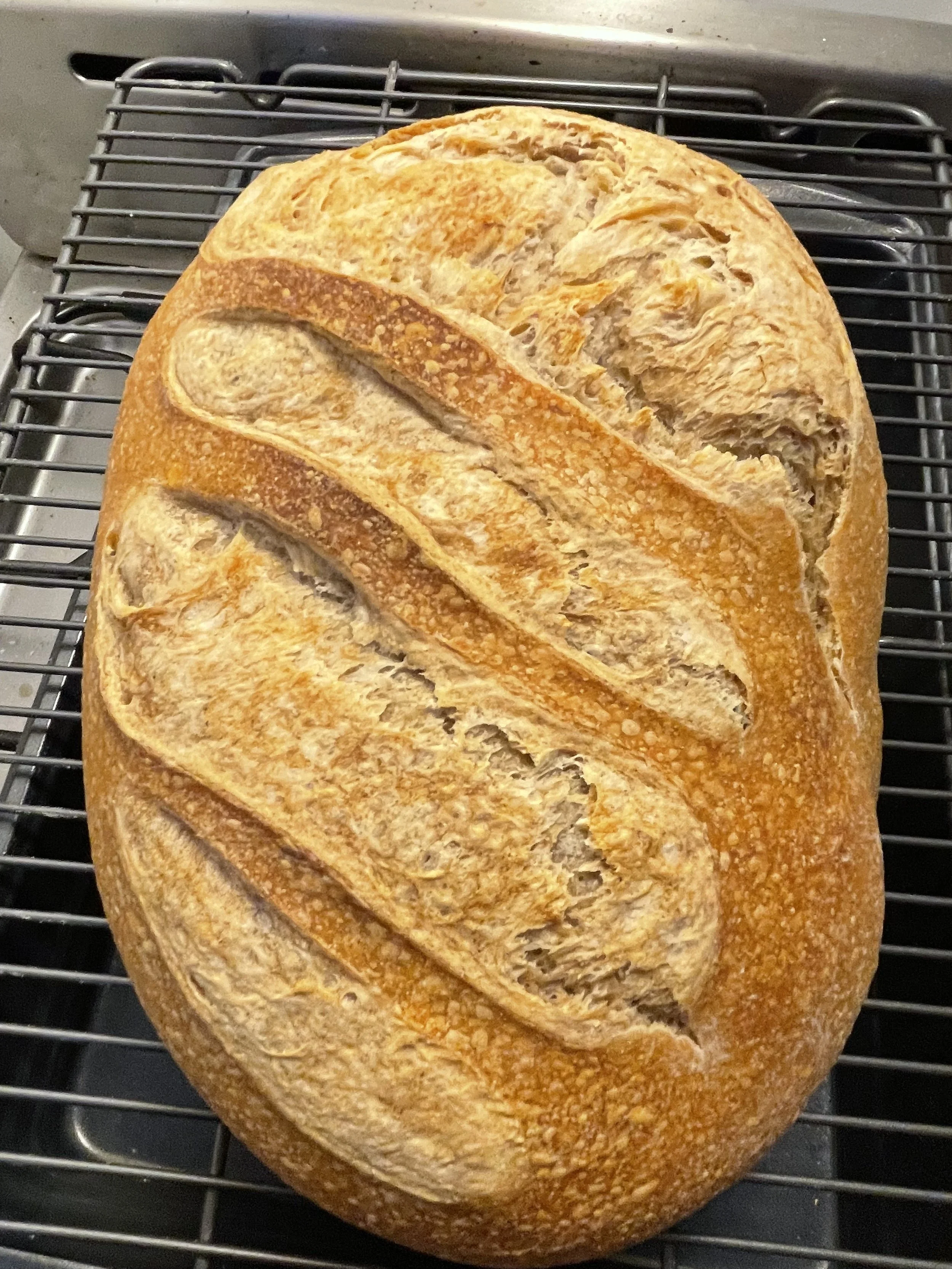
Post Bake Crust
Crispy crust with some give and audible crunch. Consistent fermentation blisters. Even rise and color. Could use a heavier steam.
Bread as a System
I think we all crave stability. We all want something to just work without much thought. The thing is… When you’re working with a living system, understanding the nuances of that system help you make the best choices. No two bakers will make the same loaf even if they follow the same instructions.
Water temperature could be different. One person’s yeast could be older than another baker’s. Maybe one home is draftier, or one oven runs colder.
The point of making bread isn’t about following one specific path. It’s about learning to control your environment with what you have. To accept that there is something beautiful in making something so simple, yet so faceted. The point is to make choices and see what happens in your own environment. And I encourage you to experiment as heavily with commercial yeast and technique as you do with sourdough starter.
